Escalating landfill saturation has become a structural constraint for modern waste management systems. Conventional disposal pathways struggle to absorb rising volumes of plastic residues, end-of-life tires, and contaminated industrial solids. Under these conditions, thermochemical conversion emerges as a pragmatic intervention, repositioning non-recyclable waste as a secondary resource rather than a terminal burden.
Landfill Diversion Through Thermochemical Conversion
A pyrolysis plant operates under oxygen-limited conditions, decomposing complex polymers into lower-molecular-weight fractions. This process directly interrupts the landfill trajectory by diverting materials that are otherwise resistant to mechanical recycling. Plastics, rubber compounds, and composite wastes undergo depolymerization, yielding recoverable energy carriers and solid carbonaceous by-products. The net effect is volumetric reduction combined with material valorization, a dual outcome rarely achieved by traditional treatment routes.
Functional Outputs and Energy Substitution
One of the principal outputs is liquid hydrocarbon, often refined or utilized as industrial fuel. A pyrolysis oil plant converts heterogeneous waste streams into a combustible fraction capable of displacing fossil-derived fuels in boilers, kilns, or further upgrading units. This substitution effect extends the impact beyond waste reduction, embedding pyrolysis within broader energy transition frameworks. Short carbon chains provide calorific density; heavier fractions offer stability in storage and transport.
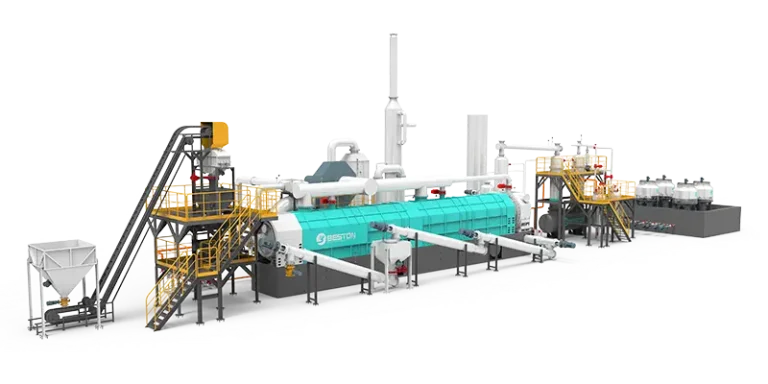
Plastic Waste and Fuel Recovery Pathways
Plastic waste represents a disproportionate share of landfill mass due to its persistence and low degradation rate. A plastic to fuel machine addresses this imbalance by transforming mixed or contaminated plastics into usable fuel without the stringent sorting requirements of mechanical recycling. Polyolefins, polystyrene, and multilayer films can be processed together, mitigating pre-treatment complexity while stabilizing throughput. This adaptability enhances operational resilience in regions with inconsistent waste segregation.

Tire Management and High-Volume Waste Streams
Discarded tires present both logistical and environmental challenges, occupying substantial landfill space and posing long-term fire risks. A waste tire pyrolysis plant converts vulcanized rubber into oil, recovered carbon black, and steel wire. Each output has an established industrial application, enabling near-complete material recovery. The reduction in bulk volume significantly alleviates landfill pressure while addressing a waste category that is globally under-managed.
Integration With Advanced Thermal Treatment
In industrial remediation contexts, pyrolysis is often complementary to a thermal desorption plant. While thermal desorption targets volatile contaminants in soils or sludges, pyrolysis can subsequently treat residual solids, ensuring comprehensive waste minimization. This sequential integration improves overall system efficiency and reduces the dependency on off-site disposal. The result is a closed-loop approach that aligns with increasingly stringent environmental compliance requirements.
Strategic Implications for Waste Infrastructure
Beyond individual facilities, pyrolysis technology reshapes waste infrastructure planning. By decentralizing treatment capacity and converting liabilities into inputs, landfill dependency is structurally reduced rather than temporarily deferred. The role of a pyrolysis plant thus extends from waste processing to systemic mitigation, addressing both spatial constraints and resource inefficiencies within modern waste economies.